













Best Charcoal for Commercial Kitchens & BBQ: A Buyer’s Guide
Kitty Nicol2026-08-19T12:58:34+10:00
Why Charcoal Choice Matters in a Commercial Kitchen
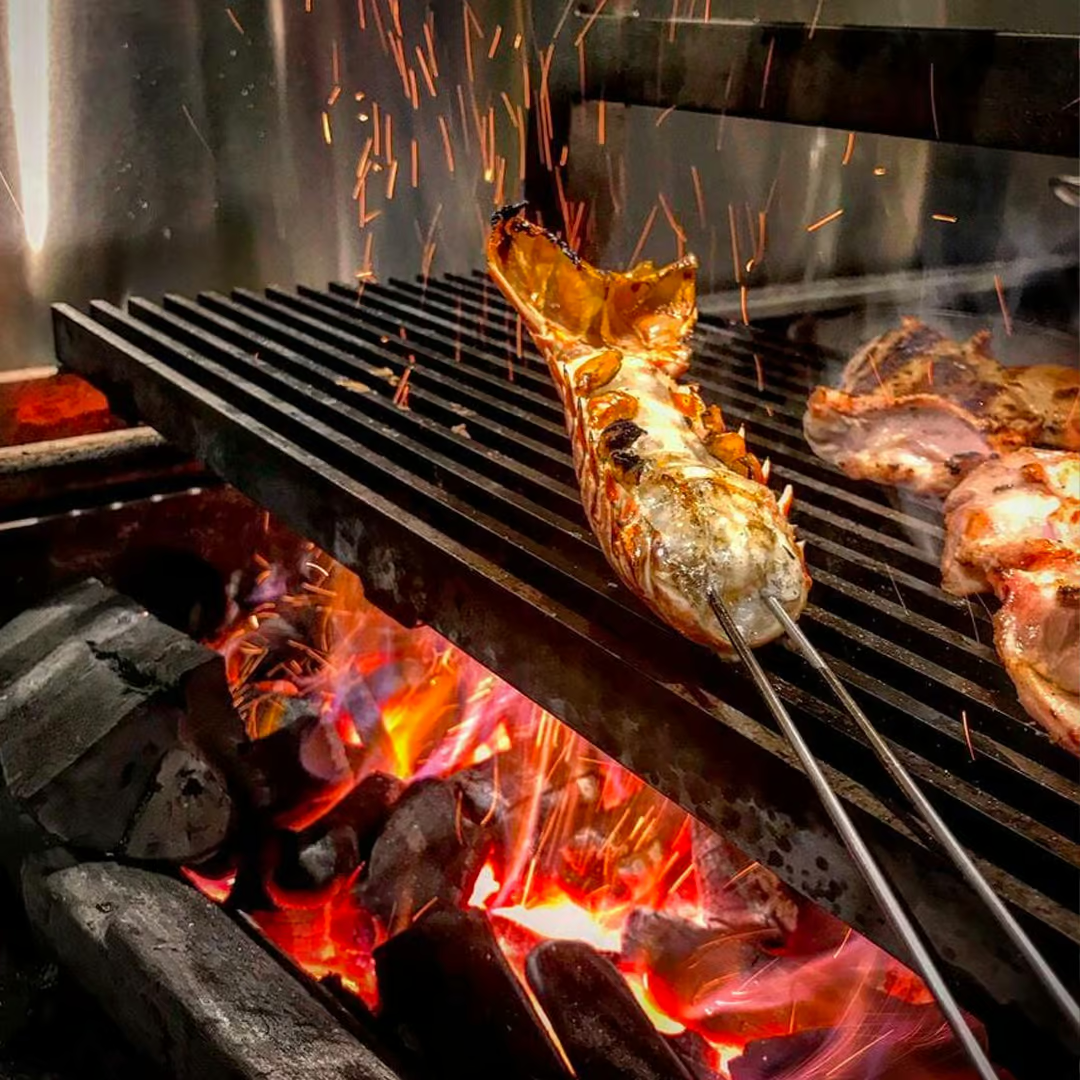
Not all charcoal is created equal — and in a commercial setting, the difference between grades directly affects your food quality, fuel costs, and service efficiency. Choosing the wrong charcoal for your kitchen type can mean inconsistent heat, excessive smoke, high ash volumes, or unexpected shutdowns mid-service. Whether you run a Japanese yakitori bar, a charcoal chicken shop, a fine-dining grill restaurant, or a spit-roast catering operation, understanding the seven main commercial charcoal grades will help you make a smarter, more cost-effective procurement decision.
The 7 Charcoal Types for Commercial Use
Professional grade lump charcoal is the highest-performing lump product available for commercial operators. Made from dense hardwood, it produces intense, sustained heat with minimal ash output — ideal for high-temperature searing in steakhouses and grill-focused restaurants. Burn times are long and heat output is consistent, which reduces refuelling interruptions during a busy service. If your kitchen relies heavily on the grill and your team is producing volume covers, this is the grade to source.
Slightly below professional grade in density, commercial lump charcoal still offers excellent heat output and is well-suited to venues that grill daily but at moderate volume. It strikes a practical balance between cost and performance, making it a popular choice for pub grills, casual dining restaurants, and charcoal chicken operations running two to three services a day.
BBQ grade lump is designed for outdoor events, catering functions, and pop-up hospitality. It lights quickly and reaches cooking temperature faster than commercial or professional grades, though it burns through more quickly. This grade suits operators who need flexibility — markets, festivals, off-site catering, and irregular service schedules where a longer-burning charcoal would be wasted.
Binchotan is a premium Japanese hardwood charcoal traditionally made from ubame oak. It is central to authentic yakitori cuisine and is increasingly sought after by upscale grill restaurants wanting to deliver genuine Japanese cooking. What sets Binchotan apart is its almost smokeless burn, extremely high heat, and very long burn time — a single load can sustain service for hours. It does not impart any foreign flavour, allowing the natural characteristics of the ingredient to come through. The cost is higher than conventional lump charcoal, but for venues positioning around a Japanese grill menu or omakase format, Binchotan is non-negotiable.
Premium pillow charcoal is a compressed, uniform-shaped product that delivers consistent, predictable heat output — an advantage in high-volume operations where kitchen staff need reliability across multiple grills or stations. The regular shape makes it easy to stack and load, and its steady burn means less monitoring during a busy service. Commonly used in commercial kebab operations, catering benches, and venues running continuous grill output.
Coconut shell charcoal is a natural, sustainable option manufactured from coconut husk waste. It burns at high temperatures, produces minimal smoke, and generates very little ash compared to wood-based lump products. A popular choice for venues conscious of sustainability credentials or operating in spaces with limited ventilation. The consistent cube or pillow shape also makes quantity calculation and stockroom management more straightforward.
Honeybrix is a compressed charcoal briquette with a distinctive honeycomb structure designed to maximise airflow. The increased surface area allows it to ignite quickly and burn evenly — a practical choice for venues that need consistent output across long events or extended outdoor service sessions.
What to Look for When Buying Commercial Charcoal
Burn time:Higher-volume operations should prioritise long-burning grades to minimise disruptions during service.Heat output:Match the heat intensity to your cooking application. High-heat searing requires a dense, high-BTU charcoal; slower smoking applications do not.Ash production:Excessive ash causes temperature fluctuations and increases cleaning time. Natural lump charcoal and Binchotan both produce significantly less ash than standard briquettes.Smoke and additives:Always source natural, additive-free charcoal for food service. Treated charcoals containing accelerants or chemical binders are not appropriate for cooking. Sustainability: Coconut and sustainably sourced hardwood charcoals are increasingly preferred by venues seeking to reduce their environmental footprint.
Matching Charcoal to Your Venue
| Venue Type | Recommended Grade |
|---|---|
| Fine-dining grill restaurant | Professional Grade Lump or Binchotan |
| Yakitori / Japanese grill | Binchotan |
| Charcoal chicken takeaway | Commercial Grade Lump |
| Pub / casual dining | Commercial Grade Lump or Premium Pillow |
| Catering / events | BBQ Grade or Honeybrix |
| Eco-conscious venues | Premium Coconut |
Whether you are a new or existing customer, we can easily set up a trading account and help you find the right charcoal solutions for your venue.
Do you have questions about exhaust hoods, open flame cooking and equipment designed for smoking ? Our team will help you find the right options to suit your venue.
For bulk delivery needs, don’t hesitate to contact our team to discuss discounted rates.
sPEAK TO A DEDICATED SALES REPRESENTATIVE TODAY!
Please fill out the form below and one of our representatives will be in touch shortly.
"*" indicates required fields