












































How to Choose a Commercial Ice Machine (Ice Types & Sizing Guide)
Teighan Graves2026-08-19T12:59:35+10:00Ice gets almost no attention until something goes wrong — a machine that can’t keep up on a hot Friday night, or a health inspector who finds mould in the ice bin. Getting your specification right and keeping the machine clean isn’t a minor detail. In Australia, it has legal implications.
Ice Is a Food — What FSANZ Says
Under the FSANZ Food Standards Code, ice intended for human consumption is classified as a food. That means your ice machine falls under the same food safety obligations as any other food production equipment:
Ice machines must be kept clean and sanitary at all times
A documented cleaning schedule must be part of your food safety program
Contaminated ice must be discarded and the machine sanitised before returning to service
Queensland Health regularly inspects ice machines during venue audits. Mould or bacterial contamination is grounds for a corrective action notice or immediate closure of ice service.
Choosing the Right Ice Type for Your Venue
| Ice Type | Best For |
|---|---|
| Cube ice | Bars, restaurants, hotels — slow-melting, minimal dilution |
| Flake ice | Seafood displays, food buffets, healthcare |
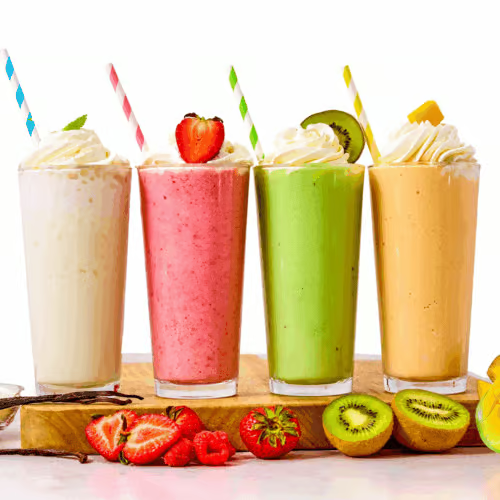
| Nugget ice | Smoothie bars, healthcare, frozen drink programs |
| Crescent ice | Self-serve stations, hotel in-room service |
Sizing — Output vs. Demand The key metric is kg output per 24 hours. Undersizing is one of the most common and costly purchasing mistakes. As a guide:
| Venue Type | Ice Demand |
|---|---|
| Bar/restaurant (per seat) | 0.3–0.5 kg/day |
| Hotel (per room) | 1–2 kg/day |
| Healthcare (per patient) | 0.5–1 kg/day
|
The BREMA CB425A-HCQ-DP
BREMA machines are engineered for high ambient temperatures and commercial-grade demands. The CB425A-HCQ-DP delivers:
Crystalline 23g cube ice — hard, clear, and slow-melting
Tropical climate rating — rated to 43°C, genuinely suited to Queensland
Hospital-grade stainless steel construction — easy to clean, corrosion-resistant
Automatic Washing System (AWS) — automates the internal cleaning cycle, removing the human compliance risk and logging cleaning events for your HACCP records
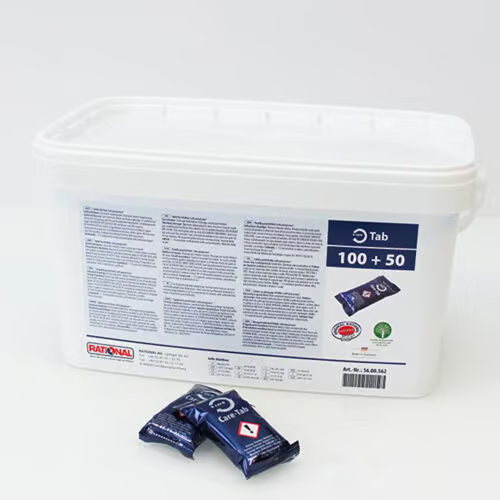
Free cleaning chemical included with purchase
Cleaning — Your Legal Obligation
The internal environment of an ice machine — cool, damp, constantly cycling — is ideal for mould, biofilm, and bacteria. Queensland Health recommends cleaning at a minimum every three months, with monthly cleaning recommended for machines running at capacity in Queensland’s climate.
A cleaning cycle must include:
Discard all ice in the bin
Sanitise all ice-contact surfaces — evaporator, water tubes, bin walls, scoop and holder
Descale water circuit components where mineral buildup is present
Sanitisation rinse with an approved food-safe chemical
Log the cleaning event in your food safety records
Browse the BREMA ice machine range online or visit the Hospitality Superstore Brisbane showroom to find the right output specification for your venue.