













































































































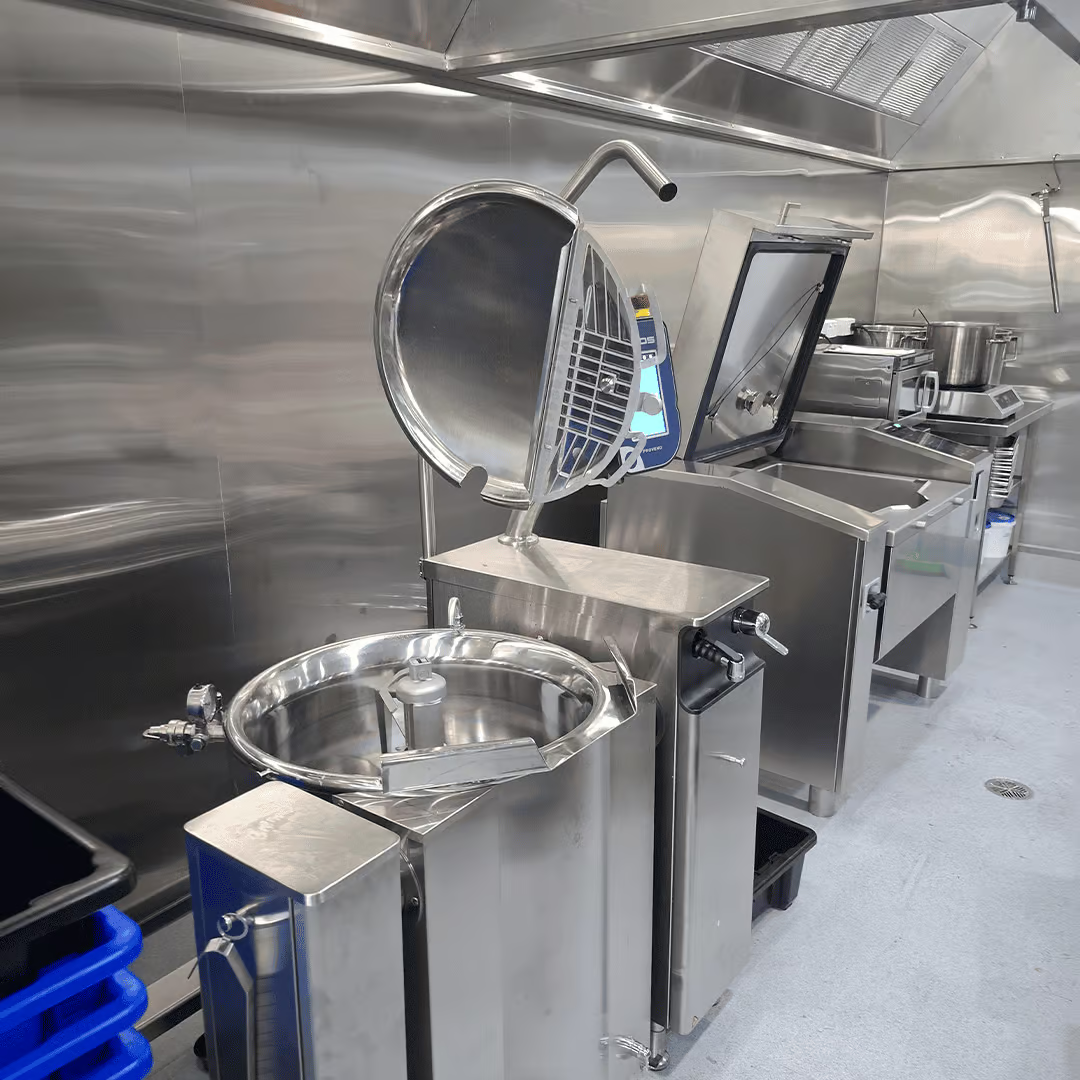
Production Kitchen Equipment: Building for Volume & Speed
Teighan Graves2026-08-19T12:59:07+10:00A production kitchen is not simply a bigger version of a restaurant kitchen. The differences are fundamental — in equipment specification, workflow design, staffing ratios, and the regulatory obligations that govern how food is prepared, chilled, stored, and regenerated at scale.
Whether you operate a central kitchen for an aged care group, a banquet kitchen for a hotel, a contract catering operation, or a school meal service, understanding how to equip a production kitchen correctly will determine your output quality, your energy costs, your food safety compliance, and ultimately your margins.
What Sets a Production Kitchen Apart
A restaurant kitchen is optimised for speed of service and flexibility. A production kitchen is optimised for volume, consistency, and the efficient management of the cook-chill-regenerate cycle.
The defining characteristics of a production kitchen include:
Batch cooking in large quantities, often for service at a later time or different location
Blast chilling to rapidly reduce core food temperatures in compliance with food safety requirements
Regeneration — the reheating of chilled or frozen meals to serving temperature at point of service
Centralised production supplying multiple outlets or remote service points
Strict HACCP documentation covering each stage of the production cycle
The Cook-Chill-Regenerate Process
The cook-chill-regenerate system is the backbone of production kitchen food safety. Under FSANZ Food Safety Standard 3.2.2, food businesses must manage potentially hazardous food so that it does not remain in the temperature danger zone (5°C–60°C) longer than necessary.
In practice, this means:
Cook — food is cooked to a safe internal temperature
Blast chill — food is rapidly chilled from 60°C to below 5°C within 90 minutes (per HACCP best practice), preventing bacterial growth
Cold store — chilled product is held at 0°C–3°C for a defined shelf life
Regenerate — food is reheated to a minimum core temperature of 75°C for service
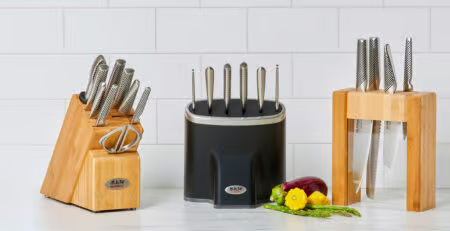
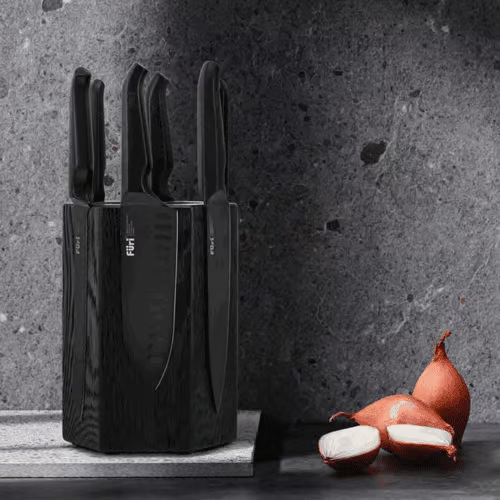
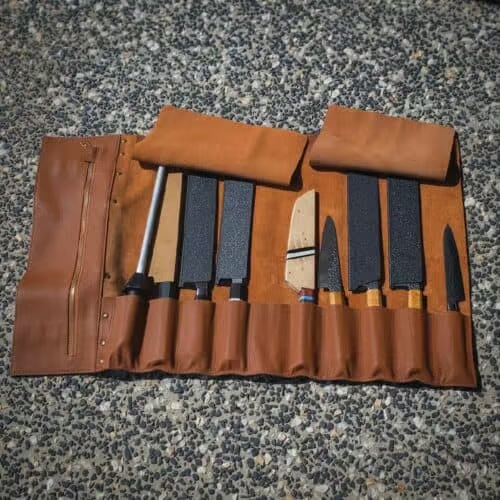
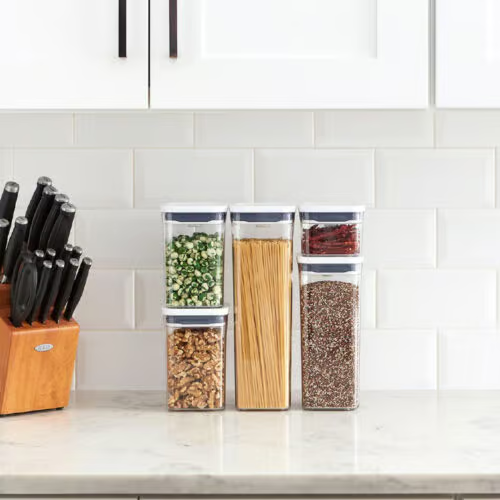
It is highly advisable to maintain your knives within a dedicated knife block or securely on a magnetic wall holder.
Why Blast Chilling Matters for Food Safety and Quality
A conventional cool room or refrigerator cannot reduce the core temperature of large food batches fast enough to meet food safety requirements. Blast chillers are specifically engineered to do this job.
Beyond food safety, blast chilling preserves food quality. Rapid chilling minimises moisture loss, maintains texture and colour, and reduces the oxidation that degrades flavour over time. For aged care operators — where resident nutrition and food presentation directly affect wellbeing — this distinction is significant.
Equipment Specification for Production Kitchens
Combi Ovens — The Engine Room
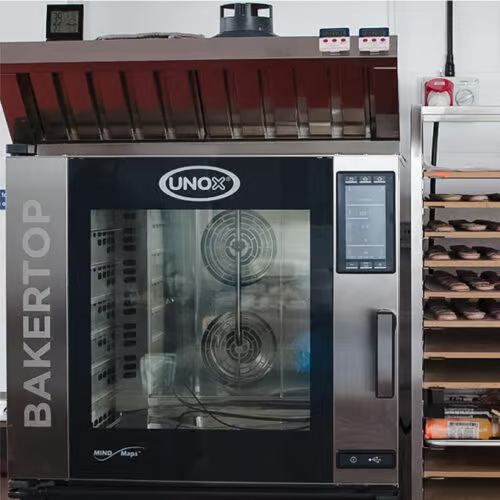
The Convotherm Flexx Pro combi oven is the workhorse of a serious production kitchen. Its combination of steam and convection cooking allows for precise batch cooking across diverse menu items — from braised proteins to baked goods — without flavour transfer between loads.
Key production features of the Convotherm Flexx Pro include:
Overnight cooking — load the oven in the evening and have slow-cooked product ready for morning service, freeing staff for other preparation tasks
Regeneration programmes — designed to reheat plated or bulk chilled meals to safe serving temperature consistently, without drying or overcooking
USB recipe management — standardise recipes across multiple units or sites, ensuring consistent output regardless of which cook is operating the oven
High capacity — available in configurations suited to cooking for 50 through to 500+ covers per cycle
For a closer look at how the Convotherm Flexx Pro performs in a production kitchen environment, the Hospitality Superstore YouTube channel features equipment demonstrations that show real-world capacity and operation.
Blast Chillers
A blast chiller sized correctly to your combi oven output is non-negotiable in a HACCP-compliant production kitchen. The rule of thumb: your blast chiller should be able to process the same load as your largest oven or cooking batch in one cycle.
Blast chillers for production kitchens typically include both rapid chilling (for hot cooked food) and shock freezing modes (for product intended for longer storage or external distribution).
Commercial Mixers — Planetary and Spiral
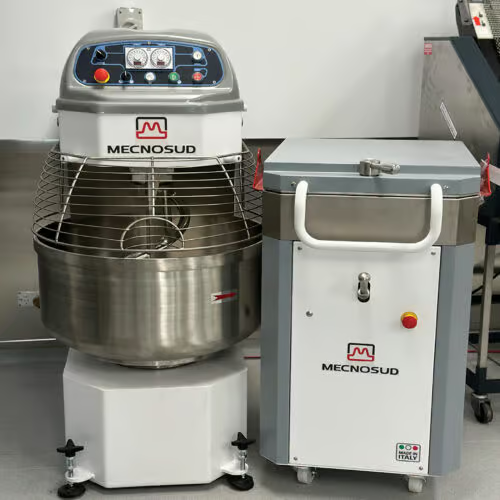
Production baking and pastry operations require mixers built for sustained heavy-load use. The choice between planetary and spiral mixers depends on your primary application:
Planetary mixers offer versatility — suitable for batters, creams, mashed vegetables, and light doughs — and are the standard for institutional catering operations with varied menus
Spiral mixers are optimised for bread and pizza dough production, providing the consistent gluten development that planetary mixers cannot replicate at volume
Both types are available in floor-standing configurations with bowl capacities suited to production volumes, typically 20–80 litres.
High-Volume Warewashing
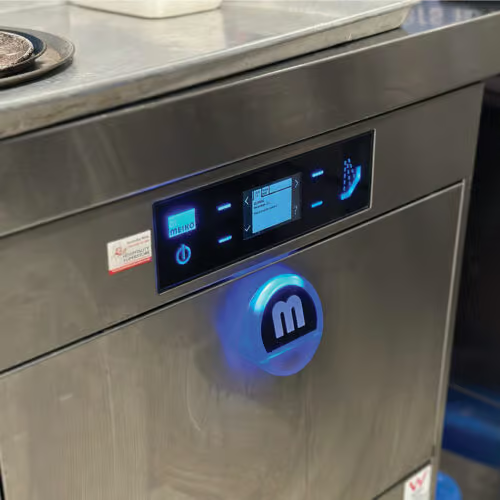
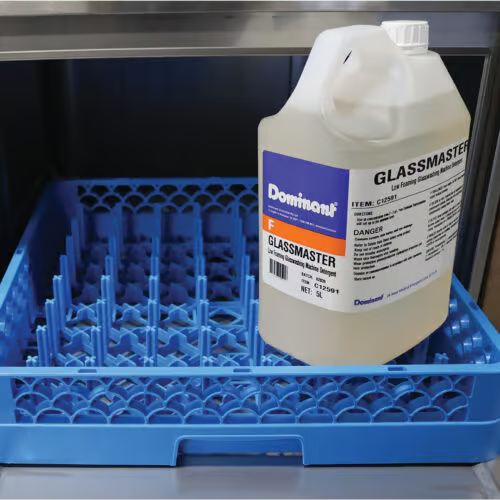
Conveyor dishwashers are the standard for production kitchen warewashing. Unlike hood-type machines that process one rack at a time, conveyor systems allow a continuous flow of ware — trays, pans, containers, and utensils — through the wash cycle.
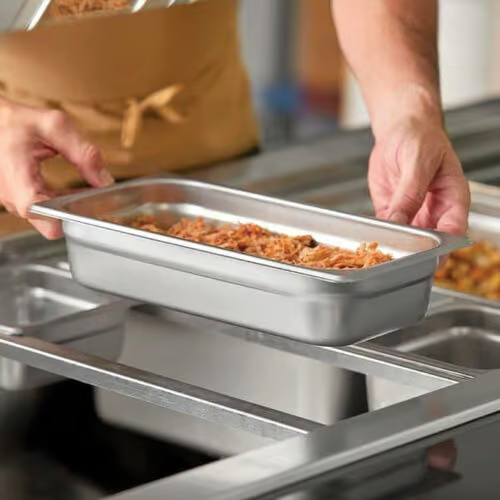
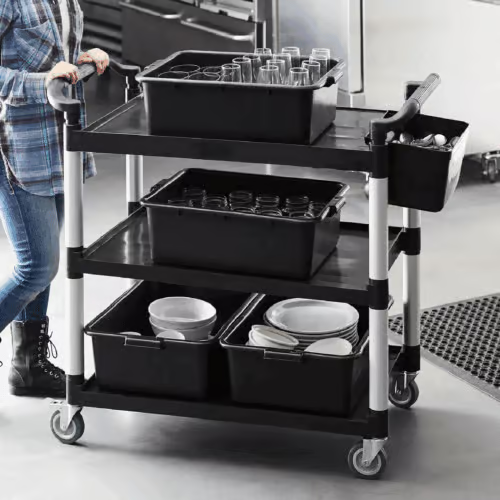
This is particularly important in production kitchens where large volumes of gastronorm pans, blast chiller containers, and transport equipment require rapid turnaround between batches.
HACCP Compliance in a Production Kitchen
A production kitchen must operate under a documented HACCP plan that identifies critical control points (CCPs) at every stage — receiving, storage, preparation, cooking, chilling, holding, regeneration, and service or dispatch.
Equipment specification directly supports HACCP compliance:
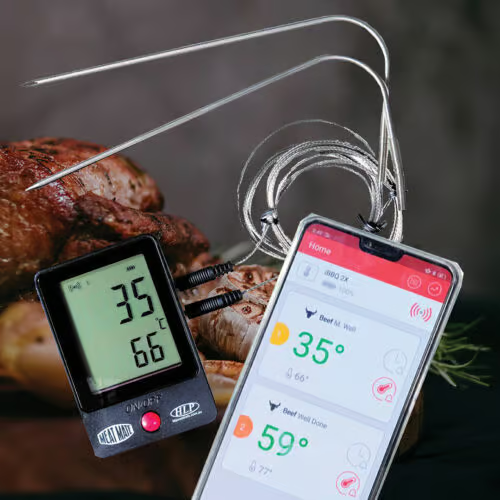
Calibrated probe thermometers for monitoring cook and chill temperatures at every CCP
Blast chillers with in-built temperature logging to provide an auditable record of each chilling cycle
Combi ovens with programmable core temperature probes to ensure consistent cook outcomes
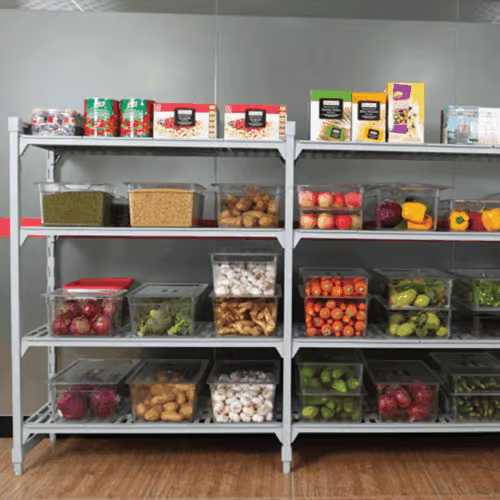
Separate storage zones — raw ingredients, chilled cooked product, and frozen product must be held in segregated, correctly tempered units
Australian Standard AS 4674-2004 (Construction and Fit-out of Food Premises) provides the physical infrastructure requirements that complement equipment-level HACCP controls.
Energy Efficiency at Volume
At production scale, energy costs are a material line item. Combi ovens with heat recovery, variable-speed compressors in refrigeration equipment, and automatic wash systems in commercial dishwashers all contribute to meaningful reductions in energy consumption.
Specifying Energy Rating-labelled equipment where available, and ensuring regular maintenance (particularly condenser cleaning and door seal integrity on refrigeration), will protect your operational cost base over the life of the equipment.
Equipping Your Production Kitchen Right
Getting the equipment specification right from the outset avoids the costly process of retrofitting or replacing underspecified equipment once production volumes grow. The Hospitality Superstore team works with production kitchen operators across aged care, education, health, and catering to specify equipment that is sized correctly, compliant, and built to run reliably at the volumes your operation demands.
Ready to specify your production kitchen? Contact the Hospitality Superstore team to discuss your volume requirements, or visit our Brisbane showroom to see production kitchen equipment in operation.